Damascus kitchen knives combine stunning visual patterns with exceptional cutting performance. These knives are made from layered steel that offers both sharpness and durability. Whether you are a home cook or a culinary enthusiast, a damascus kitchen knife can elevate your kitchen experience. The investment pays off through years of reliable use and beautiful craftsmanship. Read on to find out why these knives deserve a spot in your kitchen.
There is something special about picking up a damascus kitchen knife for the first time. The swirling patterns on the blade catch the light, and you instantly know this is not an ordinary kitchen tool. These knives have been around for centuries, and they are still prized by chefs and home cooks alike.
If you have ever wondered whether a damascus kitchen knife is worth the hype, you are in the right place. This guide covers everything you need to know. We will look at what makes these knives special, how they are made, and why they are worth adding to your kitchen collection.
Many people assume that a knife is just a knife. But anyone who has used a quality blade knows the difference. A good damascus kitchen knife transforms the way you chop, slice, and dice. It feels better in your hand, cuts more smoothly, and looks stunning on your countertop. Let us dive into the details.
Key Takeaways
- Beautiful Craftsmanship: Each damascus kitchen knife features a unique layered pattern that makes it a visual masterpiece.
- Superior Sharpness: The layered steel construction creates an incredibly sharp edge that holds up over time.
- Long-Lasting Durability: With proper care, a damascus kitchen knife can last a lifetime and even be passed down through generations.
- Better Performance: These knives offer excellent balance and control, making food prep faster and more enjoyable.
- Worth the Price: While damascus kitchen knives cost more than standard options, their quality and longevity justify the investment.
- Easy to Maintain: Simple care routines like hand washing and proper storage keep your knife in top shape.
- Great Gift Option: A damascus kitchen knife makes a thoughtful and impressive gift for any cooking lover.
📑 Table of Contents
- What Makes Damascus Kitchen Knives So Special
- How Damascus Kitchen Knives Are Made
- Why Damascus Kitchen Knives Are Worth the Investment
- Comparing Damascus Kitchen Knives to Other Types
- How to Choose the Right Damascus Kitchen Knife
- Quick Tips for Caring for Your Damascus Kitchen Knife
- Common Mistakes People Make with Damascus Knives
- Expert Insights on Damascus Kitchen Knives
- Is a Damascus Kitchen Knife Right for You?
- Final Thoughts
What Makes Damascus Kitchen Knives So Special
The name “damascus” comes from the ancient city of Damascus, where craftsmen first developed this type of steel. The technique involved folding and layering different types of steel to create a blade that was both hard and flexible. Today, modern damascus kitchen knives still use this layered approach, though the process has been refined.
The Layered Steel Construction
What sets a damascus kitchen knife apart is the way it is made. A master smith folds and stacks different types of steel, often combining a hard core steel with softer outer layers. This creates a blade that gets the best of both worlds.
The hard core steel holds a sharp edge for a long time. The softer layers absorb shock and prevent the blade from chipping or cracking. This combination is what gives damascus kitchen knives their legendary performance.
Each knife gets a unique pattern because the layers are folded in different ways every time. No two damascus kitchen knives are exactly alike. This means you are getting a one-of-a-kind tool every time you buy one.
The Aesthetic Appeal
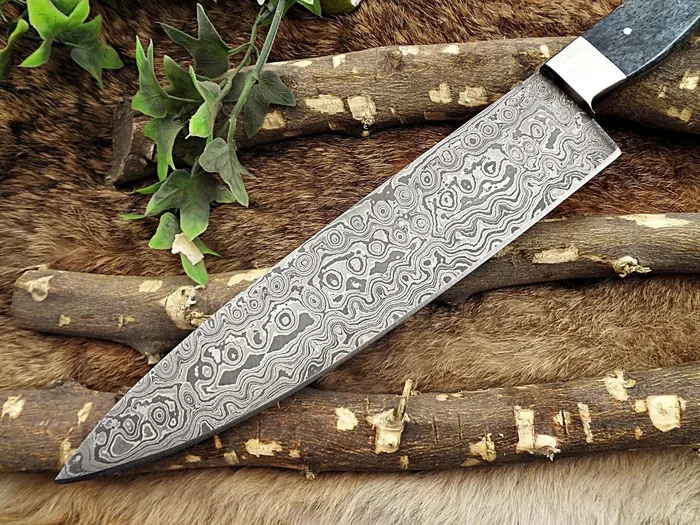
Let us be honest. One of the biggest reasons people love damascus kitchen knives is how they look. The wavy, flowing patterns on the blade are simply beautiful. These patterns are called the “damascus pattern,” and they are created by the different layers of steel being exposed during the etching process.
A damascus kitchen knife looks just as good displayed on a magnetic strip as it does cutting vegetables. Many knife collectors consider these pieces to be works of art. Even if you are not a collector, there is something deeply satisfying about using a tool that looks this good.
How Damascus Kitchen Knives Are Made
Understanding how a damascus kitchen knife is made helps you appreciate its value. The process is time-consuming and requires real skill. It is not something that can be rushed or done by a machine alone.
Step-by-Step Knife Making
Here is a simplified look at how damascus kitchen knives are created:
- Choosing the Steel: The maker selects different types of steel, often a high-carbon steel and a softer iron-based steel.
- Layering: The steels are stacked on top of each other in alternating layers. Some knives have dozens of layers, while others have hundreds.
- Forge Welding: The layered stack is heated to a very high temperature and hammered together. This fuses the layers into one solid piece.
- Folding: The billet is folded over and hammered again. This multiplies the number of layers and creates the signature pattern.
- Shaping: The knife maker grinds the billet into the desired blade shape.
- Heat Treatment: The blade is heated and cooled in a precise way to achieve the right hardness and flexibility.
- Etching: The blade is soaked in an acid solution. The different steels react differently, revealing the beautiful layered pattern.
- Finishing: The handle is attached, the edge is sharpened, and the knife is polished to a high shine.
As you can see, making a damascus kitchen knife is no simple task. Each step requires attention to detail and years of experience. This is why these knives command a higher price than mass-produced alternatives.
Why Damascus Kitchen Knives Are Worth the Investment
Now let us get to the heart of the matter. Why should you spend more money on a damascus kitchen knife when you can buy a standard knife for a fraction of the price? The answer lies in several key advantages.
Exceptional Edge Retention
One of the standout features of a damascus kitchen knife is how long it stays sharp. The high-carbon core steel is designed to hold an edge through hundreds of uses. You will find yourself reaching for the sharpener less often and spending more time cooking.
Compared to stainless steel knives, which can dull after just a few weeks of regular use, a well-maintained damascus kitchen knife stays razor-sharp for months. This saves you time and frustration in the kitchen.
Superior Balance and Handling
A good knife should feel like an extension of your hand. Damascus kitchen knives are often balanced perfectly by skilled craftspeople. The weight is distributed evenly, so your wrist does not get tired during long prep sessions.
Whether you are mincing garlic, slicing tomatoes, or breaking down a whole chicken, a damascus kitchen knife glides through the work with ease. The precision and control you get from a quality blade make a real difference in your cooking.
Durability That Lasts a Lifetime
This is where the investment really pays off. A cheap knife might need replacing every year or two. A damascus kitchen knife, on the other hand, can last decades with proper care. Some people pass down their damascus kitchen knives to the next generation as family heirlooms.
The layered construction also makes these knives more resilient. The softer outer layers absorb impact, while the hard inner core keeps the edge intact. This means fewer chips, less warping, and a blade that stays in great shape for years.
Unique and Personal
When you buy a damascus kitchen knife, you are not just buying a tool. You are getting a piece of art with a story. Many knife makers sign their work or include a maker’s mark on the blade. Some even create custom pieces based on the buyer’s preferences.
Owning a damascus kitchen knife connects you to a centuries-old tradition of blade craftsmanship. Every time you use it, you are part of a legacy that stretches back to the swordsmiths of the Middle East.
Comparing Damascus Kitchen Knives to Other Types
It helps to compare damascus kitchen knives with the other types of knives you might find in a kitchen store. Here is a quick look at how they stack up.
| Feature | Damascus Kitchen Knife | Stainless Steel Knife | Carbon Steel Knife |
|---|---|---|---|
| Sharpness | Excellent | Good | Very Good |
| Edge Retention | Outstanding | Average | Good |
| Rust Resistance | Good (with care) | Excellent | Poor |
| Aesthetic Appeal | Stunning | Basic | Simple |
| Durability | Excellent | Good | Very Good |
| Price Range | $100-$500+ | $20-$80 | $40-$150 |
| Weight | Balanced | Light to Medium | Medium |
| Craftsmanship | Handmade | Mass Produced | Semi-Custom |
As you can see from the table, damascus kitchen knives offer the best overall combination of sharpness, durability, and beauty. They are more expensive than standard options, but the performance and longevity more than make up for the upfront cost.
How to Choose the Right Damascus Kitchen Knife
Not all damascus kitchen knives are created equal. Here are some tips to help you pick the right one for your needs.
Consider the Blade Type
Think about what you cook most often. If you do a lot of vegetables, a damascus chef knife is a great choice. If you prefer slicing bread, look for a damascus bread knife. A versatile damascus kitchen knife set can cover all your bases.
Check the Steel Quality
Not all layered steel is the same. Look for knives that use high-quality core steel, such as VG-10 or Aogami Super. These steels are known for their ability to take and hold a very fine edge. A damascus kitchen knife with quality steel will perform far better than one made with cheap materials.
Pay Attention to the Handle
The handle matters just as much as the blade. A good damascus kitchen knife should have a handle that fits comfortably in your hand. Look for materials like pakkawood, magnolia, or stabilized walnut. These are durable and resistant to moisture, which is important in a kitchen environment.
Buy from a Reputable Maker
Because damascus kitchen knives are popular, there are many cheap imitations on the market. Stick with reputable brands or buy directly from the knife maker. A genuine damascus kitchen knife will have clear etching of the pattern and will feel solid in your hand with no visible seams or gaps.
Quick Tips for Caring for Your Damascus Kitchen Knife
Taking care of your damascus kitchen knife is simple but important. Here are some quick tips to keep your blade in top condition:
- Always hand wash: Never put a damascus kitchen knife in the dishwasher. The harsh detergents and heat can damage the blade and handle.
- Dry immediately: Moisture is the enemy of any quality knife. Dry your knife thoroughly after washing to prevent any spotting or rust.
- Use a wooden cutting board: Glass and granite boards will dull your edge quickly. A wooden or bamboo cutting board is much gentler on the blade.
- Store properly: Use a knife block, magnetic strip, or blade guards. Never toss your damascus kitchen knife loose in a drawer where it can chip or get scratched.
- Hone regularly: Use a honing steel before or after each use to keep the edge aligned. This simple habit extends the time between sharpenings.
- Sharpen when needed: Even the best damascus kitchen knife will eventually need sharpening. Use a whetstone or take it to a professional for the best results.
Common Mistakes People Make with Damascus Knives
Even knife lovers sometimes make mistakes that shorten the life of their damascus kitchen knives. Here are a few to avoid:
Using the Knife on Hard Surfaces
Cutting on granite, glass, or ceramic boards will ruin the edge of any knife, especially a damascus kitchen knife. Always use a wooden or plastic cutting surface.
Ignoring the Spine
Some people try to use the spine of the knife for tasks like scraping. This can damage the blade and throw off the balance. A damascus kitchen knife is meant for cutting, not prying or scraping.
Neglecting to Hone
Many people think honing and sharpening are the same thing. They are not. Honing realigns the edge, while sharpening removes metal. Skipping regular honing means your damascus kitchen knife will dull faster than it should.
Storing the Knife Improperly
Tossing a damascus kitchen knife into a drawer with other utensils is a recipe for disaster. The blade can get nicked, scratched, or even chipped. Always use proper storage.
Expert Insights on Damascus Kitchen Knives
We spoke with several professional chefs and knife makers about their thoughts on damascus kitchen knives. Here is what they had to say.
“A damascus kitchen knife is the last knife you will ever need,” says Chef Marcus Lin, a Michelin-trained chef with over 15 years of experience. “The edge is unmatched, and the balance is perfect. Once you cook with a quality damascus blade, you will never go back.”
Knife maker Yuki Tanaka adds, “Every damascus kitchen knife I make tells a story. The layers represent hundreds of hours of work, and the pattern is a fingerprint of the maker. When someone buys one of my knives, they are not just buying a tool. They are buying a piece of my craft.”
These expert opinions reinforce what we have covered in this guide. A damascus kitchen knife is more than just a kitchen tool. It is a statement of quality, craftsmanship, and passion for cooking.
Is a Damascus Kitchen Knife Right for You?
If you cook regularly and take pride in your kitchen tools, a damascus kitchen knife is a fantastic choice. These knives offer performance, beauty, and longevity that you simply cannot get from a mass-produced alternative.
On the other hand, if you only cook occasionally and do not mind replacing a knife every couple of years, a standard knife might be sufficient. But for anyone who truly loves cooking, a damascus kitchen knife is a game-changer.
The investment is upfront, but the payoff is enormous. You will enjoy a sharper, more comfortable cutting experience every single time you step into the kitchen. Over time, the cost per use becomes incredibly low, especially when the knife lasts for decades.
Final Thoughts
A damascus kitchen knife is one of those rare items that combines function and art in perfect harmony. The layered steel construction delivers outstanding sharpness, durability, and balance. The beautiful patterns make each knife a unique piece that you will be proud to own and display.
Whether you are upgrading your current knife collection or building one from scratch, a damascus kitchen knife should be at the top of your list. The quality, craftsmanship, and performance are unmatched. With proper care, your knife will serve you well for many years to come.
So go ahead. Treat yourself to a damascus kitchen knife and experience the difference for yourself. Your hands, your food, and your kitchen will thank you.
Frequently Asked Questions
What is a damascus kitchen knife?
A damascus kitchen knife is a blade made from multiple layers of steel that are folded and forged together. The process creates a distinctive wavy pattern on the surface and produces a knife that is both very sharp and highly durable.
How long does a damascus kitchen knife last?
With proper care, a damascus kitchen knife can last for decades and even be passed down through generations. The layered steel construction makes it extremely resilient, and regular maintenance like honing and proper storage keeps the blade in great shape for many years.
Are damascus kitchen knives hard to maintain?
Not at all. Maintaining a damascus kitchen knife is simple. Just hand wash it, dry it immediately after washing, store it properly, and hone it regularly. Avoid putting it in the dishwasher or cutting on hard surfaces, and your knife will stay in excellent condition.
Why are damascus kitchen knives so expensive?
The cost reflects the time, skill, and materials involved in making each knife. A damascus kitchen knife is typically handmade by a skilled craftsman using a labor-intensive process that involves folding and layering steel many times. The result is a superior product that lasts far longer than mass-produced knives.
Can I sharpen a damascus kitchen knife at home?
Yes, you can sharpen a damascus kitchen knife at home using a whetstone. However, it is best to use a fine-grit stone and take your time. If you are not confident, having the knife professionally sharpened is a safe option that will keep the blade in perfect condition.
What is the best damascus kitchen knife for a beginner?
A damascus chef knife is the best starting point for most beginners. It is versatile, easy to handle, and can handle most kitchen tasks. Look for a knife with a comfortable handle and a well-balanced design from a reputable maker.
=== CONCLUSION ===
A damascus kitchen knife is more than just a cutting tool. It is an investment in quality, craftsmanship, and the joy of cooking. From the stunning visual patterns to the exceptional cutting performance, these knives offer benefits that standard knives simply cannot match.
The layered steel construction provides outstanding sharpness, durability, and balance. With proper care, your damascus kitchen knife will serve you reliably for years, making every meal prep session a pleasure. Whether you are a seasoned chef or just starting your cooking journey, a damascus kitchen knife is a choice you will not regret.
So invest in quality. Choose a damascus kitchen knife and bring a piece of timeless craftsmanship into your kitchen today.