Finding the best kitchen tools can transform how you cook and enjoy your time in the kitchen. This guide covers everything from essential knives and cookware to small appliances and handy gadgets. You will learn what to buy, what to skip, and how to choose tools that fit your cooking style and budget.
Walking into a kitchen store or scrolling through an online shop can feel overwhelming. There are so many options for best kitchen tools that it is easy to second-guess every purchase. Do you really need that fancy garlic press? Is that expensive pan worth the hype?
The truth is, having the right tools makes cooking faster, easier, and more enjoyable. Whether you are a complete beginner or a seasoned home chef, the tools you use shape your experience every single day. This guide breaks down everything you need to know about choosing and using the best kitchen tools for your space, your budget, and your cooking style.
We will walk through must-have cookware, essential knives, time-saving appliances, and handy gadgets. By the end, you will have a clear roadmap for building a kitchen that works for you. No fluff. No filler. Just practical advice you can use right away.
Key Takeaways
- Quality over quantity: A few well-chosen tools outperform a cluttered kitchen full of cheap gadgets.
- Knives are king: A good chef knife is the single most important tool in any kitchen.
- Non-stick and stainless steel cookware: These two types cover most cooking needs for home cooks.
- Small appliances save time: A food processor, blender, or stand mixer can cut prep time in half.
- Match tools to your cooking style: Bakers need different tools than grill masters or stir-fry lovers.
- Durability matters: Investing in well-made tools pays off over years of daily use.
📑 Table of Contents
Why Having the Right Kitchen Tools Matters
Think of your kitchen tools as the foundation of every meal you cook. A dull knife makes chopping slower and more dangerous. A flimsy pan causes food to stick and burn. The right kitchen tools turn frustrating tasks into quick, satisfying wins.
When you have the right equipment, you cook more often. And when you cook more often, you eat better. It is a simple cycle that starts with the tools on your countertop and in your drawers.
Cooking Becomes Faster and Easier
A good food processor can chop vegetables in seconds. A sharp chef knife lets you slice through ingredients with confidence. These tools do not just save time. They also reduce the physical effort of cooking, which means you feel less tired after preparing a meal.
Better Tools Mean Better Results
Cheap tools often lead to uneven cooking, poor presentation, and wasted ingredients. A cast iron skillet distributes heat evenly, giving you a perfect sear on steak. A kitchen scale ensures your baking measurements are precise every time. The difference in results can be dramatic.
Must-Have Cookware for Every Kitchen
Cookware is the backbone of any kitchen. You do not need a huge collection. You need a few high-quality pieces that handle most of your cooking tasks.
Stainless Steel Pots and Pans
Stainless steel cookware is durable, non-reactive, and safe for all cooking surfaces. It works great for boiling pasta, making soups, and sautéing vegetables. The main downside is that food can stick if the pan is not hot enough. But with a little practice, stainless steel becomes your best friend in the kitchen.
Non-Stick Cookware
Non-stick pans are perfect for eggs, pancakes, and delicate fish. They require less oil and make cleanup a breeze. However, they do not last as long as stainless steel. Avoid using metal utensils on non-stick surfaces, and replace them when the coating starts to wear.
The Cast Iron Skillet
A cast iron skillet is one of the most versatile tools you can own. It retains heat beautifully, making it ideal for searing, baking, and even grilling. Many home cooks swear by their cast iron skillet as the single best investment they have ever made.
| Cookware Type | Best For | Durability | Ease of Cleaning |
|---|---|---|---|
| Stainless Steel | Boiling, sautéing, browning | Very high | Easy with proper technique |
| Non-Stick | Eggs, pancakes, delicate foods | Moderate | Very easy |
| Cast Iron | Searing, baking, grilling | Extremely high | Requires seasoning |
Quick Tips for Cookware Care
- Always preheat your pan before adding oil to prevent sticking.
- Hand wash stainless steel and cast iron. Dishwashers can damage them over time.
- Store pans with a layer of paper towel between them to prevent scratches.
- Replace non-stick pans every two to three years for best results.
Common Mistakes with Cookware
One of the biggest mistakes is using the wrong pan for the job. A thin, flimsy pan will warp over time and cook food unevenly. Another mistake is overheating non-stick pans, which can release harmful fumes. Always match your pan to the task, and never leave an empty pan on high heat.
Essential Knives and Cutting Tools
A good knife set is non-negotiable if you want to cook at home. The best kitchen tools list always starts with a sharp, reliable knife.
The Chef Knife: Your Go-To Blade
The chef knife handles about 80 percent of all cutting tasks in a kitchen. It chops vegetables, minces garlic, slices meat, and much more. Look for an 8-inch chef knife with a full tang and a comfortable handle. This is the one knife you will reach for every single day.
Other Knives Worth Having
A paring knife is perfect for small, detailed work like peeling fruit or deveining shrimp. A serrated bread knife cuts through crusty loaves without crushing the soft interior. A kitchen shears can cut herbs, trim poultry, and even open packages quickly.
Keeping Your Knives Sharp
Dull knives are actually more dangerous than sharp ones because they require extra force and are more likely to slip. Use a whetstone or a knife sharpener regularly. Honing your knife with a steel rod before each use also keeps the edge in great shape.
Cutting Boards Matter Too
Your cutting board protects both your knives and your countertop. Wooden cutting boards are gentle on blades and naturally antibacterial. Plastic cutting boards are dishwasher-safe and come in different colors for food safety. Avoid glass or marble boards, as they dull knives quickly.
Expert Insight: Many professional chefs recommend owning at least three cutting boards: one for raw meat, one for vegetables, and one for ready-to-eat foods. This simple practice prevents cross-contamination and keeps your kitchen safe.
Small Appliances That Save Time
Small kitchen appliances can make a huge difference in how quickly and easily you prepare meals. You do not need every gadget on the market. Focus on the ones that genuinely save you time and effort.
The Food Processor
A food processor chops, slices, shreds, and purees in seconds. It is invaluable for making pie crusts, salsa, pesto, and dough. If you cook at home regularly, a food processor is one of the best investments you can make.
The Blender
Whether you blend smoothies, soups, or sauces, a good blender is a kitchen staple. High-powered blenders handle frozen fruits and tough vegetables with ease. A standard blender works fine for everyday tasks like mixing batter or blending cooked soup.
The Stand Mixer
Bakers love their stand mixers. They knead dough, whip cream, and mix batters with consistent results. A stand mixer frees up your hands and takes the effort out of baking. If you bake often, this is one tool worth the investment.
The Kitchen Scale
Many baking tools are important, but the kitchen scale stands above them all. Baking is a science, and measuring by weight is far more accurate than using cups. A digital scale costs very little and dramatically improves your baking results.
Quick Tips for Choosing Small Appliances
- Read reviews before buying. Look for models with good motor life and warranty coverage.
- Choose appliances that fit your counter space. A powerful blender is useless if you cannot find room to store it.
- Consider multi-function appliances if you have limited storage space.
- Buy the size that matches your household. A large stand mixer is overkill for a single person.
Common Mistakes with Small Appliances
One common mistake is buying appliances you rarely use. That fancy electric mixer or juicer sitting in the back of your cabinet is taking up valuable space. Another mistake is skipping maintenance. Regularly clean and maintain your appliances to ensure they last for years.
Handy Utensils and Everyday Gadgets
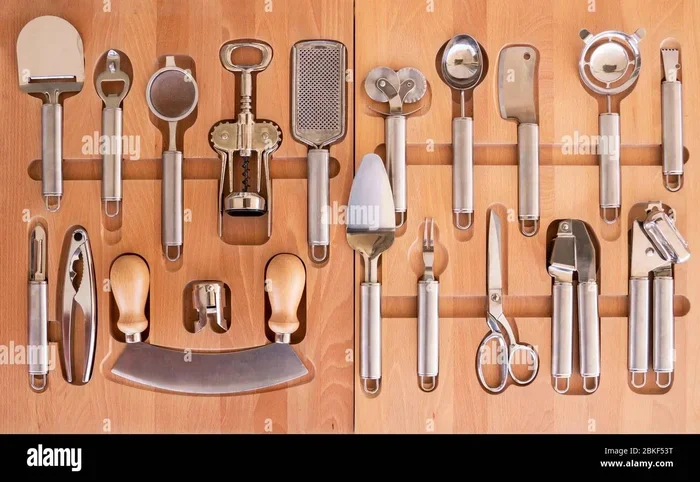
It is the small kitchen utensils and gadgets that often make the biggest difference in daily cooking. These tools handle the little tasks that add up quickly.
Silicone Spatulas and Scrapers
A set of silicone spatulas is essential for scraping every last bit of batter from a bowl. They are heat-resistant, gentle on cookware, and easy to clean. Look for a set that includes different shapes and sizes for different tasks.
Tongs and Spoons
Kitchen tongs are incredibly versatile. You use them to flip meat, toss salads, and serve pasta. A good set of wooden spoons is also a must for stirring sauces and soups without scratching your pans.
The Vegetable Peeler
A simple vegetable peeler does more than just peel potatoes. It can create thin vegetable ribbons for salads, shave chocolate, and even slice soft fruits quickly. It is one of the most underrated tools in any kitchen.
The Colander and Strainer
A colander is essential for draining pasta, washing vegetables, and rinsing canned beans. A fine-mesh strainer is great for straining sauces, sifting flour, and rinsing small grains. Both are inexpensive but incredibly useful.
Meal Prep Tools
If you like to meal prep, having the right tools makes a big difference. Meal prep containers keep your portions organized and fresh. A mandoline slicer cuts vegetables into uniform slices quickly. Storage bags and vacuum sealers help your ingredients last longer.
Quick Tips for Organizing Kitchen Utensils
- Use a utensil holder or drawer organizer to keep frequently used tools within reach.
- Store rarely used gadgets in a designated drawer or cabinet to reduce clutter.
- Hang commonly used items on a wall-mounted rack to save drawer space.
- Regularly declutter your utensils. If you have not used a tool in six months, consider donating it.
How to Choose the Best Kitchen Tools for Your Needs
With so many options available, choosing the best kitchen tools comes down to understanding your own cooking habits and needs.
Assess Your Cooking Style
Do you bake every weekend? Then invest in quality baking tools like mixing bowls, rolling pins, and baking sheets. Do you love stir-fry? A wok and a sharp cleaver will serve you better than a bread maker. Your cooking style should guide your purchases.
Set a Realistic Budget
You do not need to spend a fortune to equip a great kitchen. Focus on spending more on items you use daily, like your chef knife and your favorite pan. Save money on items you use less frequently. The best kitchen tools are not always the most expensive ones. They are the ones that fit your needs and last a long time.
Consider Your Kitchen Space
Small kitchens require smart storage solutions. Choose tools that serve multiple purposes. A mandoline slicer with interchangeable blades replaces several gadgets at once. A multi-function cooker can slow cook, pressure cook, and sauté, saving both counter space and money.
Prioritize Durability
When you invest in quality cooking essentials, you save money in the long run. A well-made chef knife can last a lifetime with proper care. Cheap tools need replacing every year or two, which costs more over time. Look for brands with solid reputations and good warranty policies.
Expert Insight on Building a Kitchen Over Time
Expert Insight: Start with the basics and build your collection gradually. You do not need everything at once. Begin with a sharp chef knife, a solid skillet, a good cutting board, and a few essential utensils. Add tools as your cooking skills grow and you identify gaps in your kitchen.
Common Mistakes When Buying Kitchen Tools
Impulse buying is one of the biggest mistakes. Those flashy gadgets on TV look amazing, but most of them sit unused. Another mistake is ignoring ergonomics. A tool that feels uncomfortable in your hand will frustrate you every time you use it. Always hold a tool before buying it if possible. Finally, avoid following trends blindly. The best kitchen tools are the ones that work for you, not the ones that are trending on social media.
Quick Tips for Smart Purchasing
- Read customer reviews and watch video demonstrations before buying.
- Buy from reputable brands known for quality and customer service.
- Take advantage of sales and holiday deals for big-ticket items.
- Test tools in-store when possible to check weight, balance, and comfort.
Conclusion
Building a kitchen full of the best kitchen tools is a journey, not a one-time shopping trip. Start with the essentials, invest in quality where it counts, and add tools as your cooking skills grow. The right set of cooking essentials makes every meal easier, faster, and more enjoyable.
Remember, the goal is not to own every gadget on the market. The goal is to have a kitchen that supports the way you cook and eat. Whether you are a weeknight dinner maker or a weekend baking enthusiast, the right kitchen tools make all the difference.
Take what you have learned from this guide, assess your current kitchen setup, and make a plan for what you need next. Start with one or two upgrades and build from there. Your future self, standing in a well-organized, fully equipped kitchen, will thank you.
FAQs
What are the top 5 kitchen tools every home cook should own?
The top five essentials include a quality chef knife, a stainless steel skillet, a cutting board, a set of silicone spatulas, and a wooden spoon set. These five tools handle the vast majority of everyday cooking tasks and form the foundation of any well-equipped kitchen.
How often should I replace my kitchen tools?
It depends on the tool and how often you use it. Non-stick pans should be replaced every two to three years. Chef knives can last a lifetime with proper sharpening and care. Silicone utensils typically last several years unless they become cracked or discolored. Regular inspection helps you know when to replace any item.
Is it worth buying expensive kitchen tools?
For items you use daily, like a chef knife or a quality cast iron skillet, investing in higher-end options pays off. These tools last longer, perform better, and make cooking more enjoyable. For items you rarely use, budget-friendly options work just fine.
What is the difference between stainless steel and non-stick cookware?
Stainless steel is more durable and better for browning and deglazing, but it requires proper technique to prevent sticking. Non-stick cookware is easier to use for delicate foods like eggs and fish, but the coating wears out over time. Many home cooks benefit from having both types in their kitchen.
Can I use metal utensils with non-stick pans?
No, you should avoid using metal utensils on non-stick surfaces. They can scratch and damage the coating, reducing the pan’s lifespan and potentially releasing harmful particles. Use wooden, silicone, or nylon utensils with non-stick cookware instead.
How do I organize a small kitchen with limited storage?
Start by decluttering and keeping only the tools you use regularly. Use wall-mounted racks for frequently used items, drawer organizers for utensils, and stackable containers for storage. Choose multi-purpose kitchen gadgets and invest in space-saving solutions like magnetic knife strips and hanging pot racks.