Creating a pantry in a small kitchen is easier than you think. With the right storage solutions, clever organization, and a few smart hacks, you can maximize every inch of your kitchen. This guide covers everything from shelf setups to labeling systems that keep your food fresh and your space clutter-free.
Living in a small kitchen doesn’t mean you have to sacrifice organization. A well-designed pantry can change everything. It gives you room to store food, spices, and cooking essentials without cluttering your counters. Whether you have a tiny apartment kitchen or a compact home setup, a pantry in a small kitchen is totally doable.
In this guide, we walk you through every step. You will learn how to plan your space, pick the right storage tools, and keep things tidy. By the end, you will have a clear roadmap to build a pantry that works for you. Let us get started.
Key Takeaways
- Start with a plan: Assess your space and needs before buying any storage products.
- Use vertical space: Shelves, hooks, and over-the-door organizers make a big difference.
- Group like items together: Categories make finding things fast and easy.
- Choose clear containers: They save space and help you see what you have at a glance.
- Label everything: A simple label system keeps your pantry organized long-term.
- Think outside the box: Use doors, walls, and corners for extra storage.
📑 Table of Contents
- Why Every Small Kitchen Needs a Pantry
- Step 1: Assess Your Space and Plan Your Layout
- Step 2: Choose the Right Storage Solutions
- Step 3: Maximize Vertical Space
- Step 4: Organize and Label Like a Pro
- Step 5: Keep Your Pantry Fresh and Functional
- Common Mistakes to Avoid
- Expert Tips for a Stunning Pantry Makeover
- Conclusion
Why Every Small Kitchen Needs a Pantry
A pantry is more than just a closet for food. It is your kitchen’s secret weapon. When you have a dedicated storage area, your counters stay clear. Your cooking flow improves. And your mornings and evenings become less stressful.
Without a pantry, items pile up on counters and tables. Spice jars take over the stove. Canned goods crowd the fridge. A small kitchen pantry solves all of this. It creates a home for everything that doesn’t need to be on display.
Here is why a pantry matters so much:
- It frees up counter space for meal prep.
- It keeps food fresh by storing items properly.
- It reduces food waste because you can see what you have.
- It saves time when you are cooking or meal planning.
- It makes your kitchen look bigger and less cluttered.
Even a few feet of wall space can become a functional pantry. The key is using it wisely. A pantry in a small kitchen does not need to be huge. It just needs to be smart.
Step 1: Assess Your Space and Plan Your Layout
Before you buy anything, take a good look at your kitchen. Measure your walls, cabinets, and any unused corners. Every inch counts in a small kitchen. Write down what you want to store and how much space you have.
Think about your cooking habits. Do you use a lot of spices? Do you buy groceries in bulk? Do you keep canned soups and pasta on hand? Your pantry should reflect how you actually cook. If you love making chilli chicken kebabs for dinner, you will want easy access to spices, oils, and marinades.
Measure Everything
Grab a tape measure and note the dimensions. Check the height between counters and upper cabinets. Look at the depth of your shelves. Even a narrow gap between the fridge and the wall can hold slim shelves for cans and jars.
Map Out Zones
Divide your pantry into zones. Group items by category. For example:
- Zone 1: Dry goods like rice, pasta, and cereals.
- Zone 2: Canned goods and jars.
- Zone 3: Spices and seasonings.
- Zone 4: Snacks and baking supplies.
- Zone 5: Cooking oils and condiments.
Zones make it easy to find things fast. They also help you restock without digging through clutter. When you know exactly where everything belongs, cleanup becomes a breeze.
Step 2: Choose the Right Storage Solutions
Now comes the fun part. You get to pick storage tools that fit your space. There are so many options designed specifically for small kitchens. The trick is to mix and match until you find what works best.
Wall-Mounted Shelves
Wall-mounted shelves are a game changer. They take up zero floor space but add tons of storage. You can install them above your counters, near your stove, or in any empty wall area. Use them for jars, spices, and everyday items you reach for often.
Go for open shelves if you want easy access. They also make your kitchen feel more open. Just keep the items neatly arranged. A few matching jars on a shelf can look really stylish.
Over-the-Door Organizers
Do not ignore the back of your pantry door. Over-the-door organizers are perfect for small spaces. Hang them on the inside of any door in your kitchen. They are great for spices, snack bags, and small packets.
These organizers are cheap and easy to install. They use space that would otherwise go to waste. A simple over-the-door rack can add a surprising amount of storage to your pantry in a small kitchen.
Rolling Cart or Trolley
A rolling cart is one of the most versatile pantry tools. You can slide it into a narrow gap or tuck it under a counter. Use the shelves for canned goods, oils, or snacks. When you need extra counter space, just roll it away.
Look for carts with small wheels that lock in place. Metal carts with multiple tiers work especially well. They give you three or four levels of storage in a very compact footprint.
Stackable Bins and Baskets
Stackable bins are perfect for maximizing shelf space. They let you group items together and keep them neat. Choose clear bins so you can see what is inside without pulling everything out.
Baskets work well for fruits, vegetables, and bread. They keep these items in one place and make them easy to grab. Use a mix of bins and baskets to create a layered, organized look.
Step 3: Maximize Vertical Space
When floor space is limited, you must think up. Vertical storage is the secret weapon of every small kitchen. It uses the full height of your walls and cabinets to add storage without taking up more room.
Install Tension Rods
Tension rods are cheap and require no drilling. Place them inside a cabinet or between two walls. You can hang lightweight baskets, hooks, or even small pots from them. They instantly double your usable space.
Use Tiered Shelf Risers
Shelf risers are simple platforms that stack on top of each other. They create two levels of storage on a single shelf. Perfect for spices, canned goods, or jars. You can see everything at a glance, which cuts down on wasted food.
Hang Pots and Pans
If your cabinets are full, consider hanging your pots and pans. A wall-mounted pot rack frees up cabinet space for pantry items. It also adds a rustic, cozy look to your kitchen. Just make sure it is installed securely and positioned away from the stove.
Every vertical inch you use brings you closer to a perfectly organized pantry in a small kitchen. Start with one solution and add more as you go.
Step 4: Organize and Label Like a Pro
Setting up your pantry is only half the battle. Keeping it organized requires a simple system. The best part? It takes just a few minutes each week to maintain.
Use Clear Containers
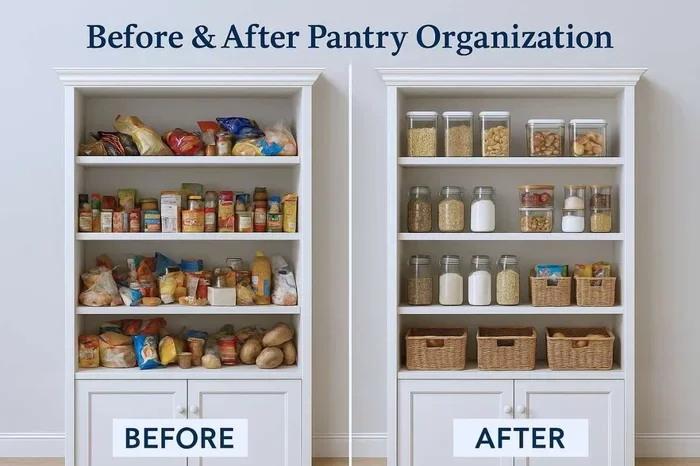
Transfer dry goods like flour, sugar, rice, and pasta into clear containers. They protect your food from pests and moisture. They also let you see exactly how much you have left. No more digging through bags to find what you need.
Choose containers that are the same shape and size. They stack neatly and look uniform on shelves. Glass containers work great, but BPA-free plastic is lighter and safer if you have kids.
Label Everything
A label maker or a simple set of sticky labels goes a long way. Label every container, bin, and basket. Write the item name and the date you stored it. This small habit keeps your pantry running smoothly for months.
You can also label shelves with category names. For example, label one shelf “Breakfast” and another “Canned Goods.” This makes it easy for everyone in the household to put things back in the right place.
Follow the FIFO Rule
FIFO stands for First In, First Out. Place newer items behind older ones so you use what you bought first. This simple habit reduces food waste and saves money. You will always use your oldest items before they expire.
When you store items like spices or oils, check the dates regularly. Replace anything that has lost its flavor or gone past its prime. A well-maintained pantry feels satisfying and makes cooking more enjoyable.
Step 5: Keep Your Pantry Fresh and Functional
Organization is an ongoing process. Once your pantry is set up, you need to maintain it. A few simple habits will keep it working perfectly for years.
Do a Weekly Check
Spend five minutes each week scanning your pantry. Toss anything expired. Put away items that got misplaced. Wipe down shelves if needed. This quick habit prevents clutter from building up.
Shop with a List
Before you buy groceries, check what you already have. A shopping list based on what you need prevents overbuying. Overbuying is one of the biggest causes of pantry clutter. When you only buy what you will use, everything stays organized.
Rotate Seasonal Items
Store seasonal items like holiday baking supplies or summer grilling spices in a separate bin. Rotate them in and out as the seasons change. This keeps your everyday pantry focused and uncluttered.
Add Good Lighting
If your pantry is in a dark corner, add a small light. Battery-operated LED strips are easy to install and make a huge difference. You will be able to see everything clearly, which makes cooking faster and more fun.
Small touches like lighting and matching containers add up. They turn a basic storage area into a beautiful, functional pantry in a small kitchen. The goal is a space that feels good to use every single day.
Common Mistakes to Avoid
Even with the best intentions, it is easy to make mistakes when setting up a pantry. Here are a few pitfalls to watch out for.
- Buying too many storage products. Start with what you need. You can always add more later.
- Ignoring expiration dates. Old spices and expired canned goods take up valuable space.
- Skipping labels. Unlabeled containers lead to confusion and clutter over time.
- Storing everything on one level. Use every inch of vertical space with risers and hooks.
- Forgetting to involve the family. If everyone knows where things go, the pantry stays organized longer.
Avoid these mistakes and your pantry will stay neat and functional. A little planning goes a long way in a small kitchen.
Expert Tips for a Stunning Pantry Makeover
Want to take your pantry to the next level? These expert tips will help you create a space that looks as good as it works.
- Stick to a color scheme. Matching containers in white, glass, or clear create a clean, unified look.
- Use drawer dividers. They work wonders for spices, utensils, and small items inside cabinets.
- Add a small whiteboard. Pin your grocery list and meal plan to the pantry door for easy reference.
- Include a step stool. A compact stool helps you reach high shelves safely.
- Keep a “donate” box handy. When you find items you no longer need, toss them in the box and donate regularly.
These small changes add up fast. They make your pantry feel polished and professional. Even the smallest kitchen can have a pantry that looks and works beautifully.
Conclusion
Creating a pantry in a small kitchen is one of the best things you can do for your home. It saves space, reduces stress, and makes cooking more enjoyable. You do not need a big budget or a lot of tools. You just need a plan and a willingness to start small.
Measure your space, choose the right storage solutions, and set up zones for your items. Use vertical space, label everything, and keep things fresh with simple weekly habits. Before long, your pantry will be the envy of every small kitchen in the neighborhood.
Start today. Pick one corner, add one shelf, and build from there. Your organized kitchen is just a few steps away. You have got this.
Frequently Asked Questions
How do I create a pantry in a very small kitchen?
Start by using wall-mounted shelves and over-the-door organizers. These tools use space you already have without taking up floor area. A rolling cart or tension rods can add even more storage in tight spots.
What are the best containers for a small pantry?
Clear, stackable containers work best. They let you see what you have and save space by stacking neatly. Glass containers look great, but BPA-free plastic is lighter and safer for families with children.
How often should I organize my pantry?
A quick five-minute check once a week keeps things tidy. Do a deeper organization session every season. This prevents clutter from building up and keeps your pantry running smoothly.
Can I create a pantry without any renovation?
Absolutely. Most pantry solutions are rental-friendly and require no drilling. Over-the-door organizers, tension rods, and rolling carts all work without any permanent changes to your kitchen.
What should I store in my small kitchen pantry?
Store dry goods like rice, pasta, and cereals. Keep canned goods, spices, oils, and snacks organized by category. Think about your cooking habits and keep the items you use most within easy reach.
How do I prevent my small pantry from getting cluttered again?
Use the FIFO method and label everything. Shop with a list based on what you already have. Involve everyone in your household so items always go back to the right spot after use.