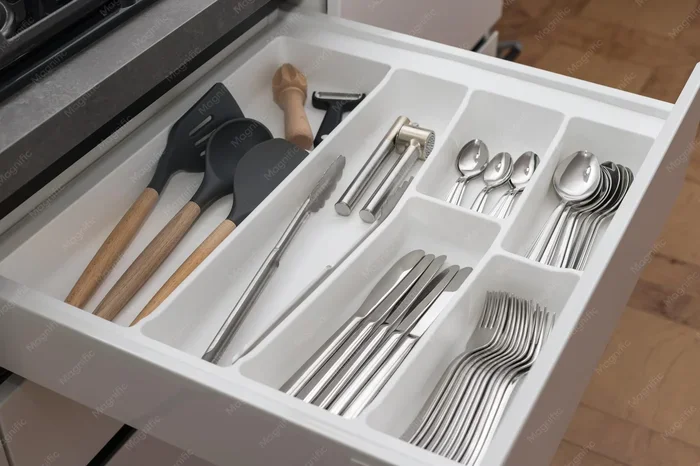
Learning how to store kitchen utensils without drawers is easier than you think. Whether you have a small apartment, a vintage kitchen, or simply prefer an open look, plenty of stylish and functional solutions exist. From wall-mounted racks to countertop crocks, these methods keep your tools organized and within reach. You will find simple tips that save space and add charm to any kitchen.
Not everyone has the luxury of kitchen drawers. Maybe you live in a cozy apartment with an older layout. Perhaps you renovated and chose open storage for a modern feel. Or maybe your drawers are just too full already. Whatever the reason, figuring out how to store kitchen utensils without drawers is a challenge many homeowners face.
The good news is that drawer-free storage can actually work better for some kitchens. Open storage keeps your most-used tools visible and within arm’s reach. It also adds a personal touch that closed cabinets simply cannot match. In this guide, you will discover dozens of practical ideas to organize your kitchen without a single drawer.
We will cover everything from wall-mounted solutions to clever countertop tricks. Each idea is simple, affordable, and easy to implement. By the end, you will have a clear plan to transform your kitchen storage completely.
Key Takeaways
- Wall-mounted racks: A clean and space-saving way to display and access your utensils daily.
- Countertop organizers: Keep frequently used tools handy with crocks, jars, and tiered stands.
- Over-door and tension rod solutions: Maximize hidden spaces that most people overlook entirely.
- Open shelving: Combines storage with a decorative touch that makes your kitchen feel larger.
- Magnetic strips: A sleek, modern option for storing metal utensils securely on any wall.
- Pegboard systems: Fully customizable and perfect for unique kitchen layouts and odd spaces.
- Repurposed containers: Save money by using cans, jars, and baskets you already own.
📑 Table of Contents
Why Drawer-Free Utensil Storage Works
Before diving into specific methods, let us talk about why going drawerless makes sense. Many people assume drawers are the only proper place for utensils. But open storage offers benefits that hidden drawers simply cannot provide.
First, visibility matters. When your utensils are out in the open, you actually see what you own. This means less duplicate buying and less forgotten tools hiding in the back. You reach for what you need faster, which makes cooking smoother.
Second, drawer-free storage often saves space. Drawers take up deep cabinet space that could serve other purposes. By moving utensils to walls or counters, you free up valuable storage for pots, pans, and dry goods. Small kitchens especially benefit from this swap.
Third, open storage adds personality. A well-organized utensil display becomes a design feature. It shows your style and makes the kitchen feel welcoming. Many interior designers now recommend open storage as a focal point in modern kitchens.
Common Kitchen Utensil Storage Problems
Most people run into a few familiar problems when storing utensils without drawers. Understanding these issues helps you pick the right solution.
- Clutter on the counter: Without a designated spot, utensils pile up everywhere.
- Limited drawer space: Standard drawers barely fit large serving spoons and spatulas.
- Difficulty finding items: Deep drawers make it hard to see what is inside.
- Damage to utensils: Crowded drawers cause handles to bend and heads to chip.
- Accessibility issues: Low drawers are hard to reach, especially for older adults or children.
Each of these problems has a simple solution. The key is choosing a storage method that fits your kitchen layout and daily routine.
Wall-Mounted Solutions for Utensil Storage
Walls are the most underrated storage space in any kitchen. When you learn how to store kitchen utensils without drawers, wall-mounted options should be your first consideration. They keep counters clear and make every utensil easy to grab.
Over-the-Sink Racks
An over-the-sink rack is a fantastic option for small kitchens. It uses the empty space above your sink, which most people completely ignore. You can hang multiple utensils right where you need them most. After washing, they drip right into the sink. No extra drying space required.
Look for racks made from stainless steel or bamboo. Both materials handle moisture well. Some models also include hooks for hanging pots and pans. This makes the rack a multi-purpose storage tool.
Magnetic Utensil Strips
Magnetic strips are a sleek, modern solution that works beautifully for metal utensils. You mount a thin strip on the wall, and your knives and spoons stick right in place. It looks almost like a piece of art more than storage.
These strips are incredibly strong. A single strip can hold six to ten utensils easily. They take up zero counter or cabinet space. Many brands now offer magnetic strips in wood finishes to match any kitchen decor.
One important tip: make sure the strip is mounted securely. Use the screws provided, not just adhesive strips. Heavy kitchen knives need a firm hold for safety. Check the mounting instructions carefully before installing.
Wall-Mounted Utensil Racks with Bars
Traditional wall-mounted racks with horizontal bars remain one of the most popular options. They come in many styles, from rustic wood to modern metal. You simply hang your utensils by the handle through the slots or loops.
These racks work well for all utensil types. Spatulas, ladles, whisks, and tongs all hang nicely. You can choose a single-bar rack for a few tools or a multi-tier version for larger collections. Some racks even include a built-in knife holder at the bottom.
Installation is straightforward. Most racks come with a mounting template. You just mark the holes, drill, and attach. If you rent your home, look for rack models that use adhesive or tension-based mounting instead of screws.
Pegboard Systems
Pegboard systems offer the most customizable wall storage available. You mount a pegboard panel on the wall, then add hooks and holders wherever you need them. The beauty of pegboard is that you can rearrange it anytime.
Add utensil hooks near the cooking area. Hang a small basket above the stove for spices. Attach a paper towel holder on the side. The possibilities are nearly endless. Many home improvement stores sell pegboard kits specifically designed for kitchens.
Paint the pegboard to match your kitchen color scheme. A white or black pegboard blends seamlessly into most decor. You can also use pegboard accessories to create a truly unique storage wall that reflects your personal style.
Countertop Utensil Storage Ideas
Countertop storage is the most convenient option for everyday utensils. When you cook frequently, having your tools right at hand makes a big difference. The trick is choosing organizers that look good and do not clutter your workspace.
Utensil Crocks and Jars
A utensil crock is the classic solution for a reason. It works, it looks great, and it comes in countless styles. You simply drop your utensils into the crock after use, and they stay upright and organized.
Ceramic crocks are the most popular choice. They are heavy enough not to tip over and come in many colors and patterns. Glass jars also work wonderfully. A tall mason jar filled with long-handled spoons and spatulas adds a charming farmhouse touch.
For a budget-friendly option, clean out a tin can or glass bottle. Wrap it in twine or paint it to match your kitchen. Instant utensil holder for almost no cost at all.
Tiered Countertop Stands
Tiered stands solve the problem of limited counter space. They stack utensils vertically in layers, so you can store more tools in a smaller footprint. Each tier holds different items, keeping everything separated and visible.
These stands work especially well for kitchens with limited drawer alternatives. A two-tier stand fits easily in a small corner near the stove. Many models are made from bamboo or stainless steel, both durable and easy to clean.
When choosing a tiered stand, measure your available counter space first. You want the stand to fit comfortably without blocking your workspace. Look for stands with a low profile that keep the area feeling open.
Magnetic Knife Blocks
Magnetic knife blocks are a space-efficient alternative to traditional knife blocks. They mount to the wall or sit on the counter, and the magnetic strip holds knives securely in place. This eliminates the bulk of a standard wooden block.
Wall-mounted magnetic knife blocks save even more counter space. They keep your knives visible and accessible, which is actually safer than digging through a crowded drawer. You see every blade clearly and can grab the right one quickly.
Make sure to clean the magnetic strip regularly. Knife blades can collect dust and residue over time. A quick wipe with a damp cloth keeps them in top condition. Also, always store knives with the blade facing down to protect the edge.
Creative Storage Using Everyday Items
You do not need to buy expensive organizers to store utensils without drawers. Many common household items work surprisingly well as utensil holders. This approach saves money and adds a personal, handmade feel to your kitchen.
Repurposed Cans and Jars
Empty cans and glass jars are perfect for holding long utensils like spoons, spatulas, and tongs. Simply clean them out, remove the labels, and you have a free storage container. Group similar items together for a neat look.
Paint the outside of cans in coordinating colors for a polished appearance. You can also line them up on a tray to create a more structured display. This works especially well on a windowsill or a small corner of the counter.
Tension Rod Solutions
Tension rods are incredibly versatile and perfect for drawerless kitchens. Install a tension rod inside a cabinet, between two walls, or even inside a tall pot. You can hang utensils from small hooks attached to the rod.
Inside a tall cabinet, a tension rod creates a second tier of storage. Hang lightweight utensils from small S-hooks, and you instantly double your storage capacity. No drilling required. The rod stays in place through pressure alone.
Over-Door Organizers
Over-door organizers are not just for shoes and toiletries. A slim over-door organizer hung on a pantry or cabinet door can hold an impressive number of utensils. The clear pockets let you see what is inside at a glance.
This method works best for less frequently used items like specialty spoons or serving tools. It keeps them out of the way but easy to find when you need them. Choose an organizer with sturdy hooks that won’t slip off the door.
Baskets and Containers
A simple basket on the counter or shelf can hold a collection of utensils beautifully. Woven baskets add warmth and texture to any kitchen. You can use a single large basket or several small ones grouped together.
Line the basket with a cloth napkin or small tray to keep the utensils from rattling around. This also makes it easy to lift the entire basket and clean the surface underneath. It is a simple trick that makes a big difference in daily kitchen life.
Organizing Tips for Drawer-Free Kitchens
Going drawerless requires a bit more intentionality. Without drawers to hide clutter, everything is on display. But with a few smart habits, your drawer-free kitchen can look even better than a traditional one.
Keep Only What You Use
The golden rule of drawer-free storage is to own fewer utensils. When everything is visible, clutter becomes obvious quickly. Go through your collection and keep only the tools you actually use on a regular basis.
Store specialty items like a candy thermometer or avocado slicer in a separate drawer or cabinet. Reserve your open storage for the ten to fifteen utensils you reach for every day. This keeps your display clean and functional.
Group Utensils by Function
Organizing utensils by purpose makes your kitchen more efficient. Group cooking tools together, baking tools in another spot, and serving utensils in a third area. This way, you always know exactly where to find what you need.
Common groupings include:
- Cooking tools: spatulas, tongs, wooden spoons, ladles
- Baking tools: whisks, measuring spoons, spatulas
- Serving tools: serving spoons, salad tongs, carving knives
- Specialty tools: garlic press, vegetable peeler, pizza cutter
Add Labels for Extra Organization
If you have multiple storage spots, labels help everyone in the household know where things belong. Small adhesive labels on jars or baskets take seconds to apply but save a lot of confusion.
Use a label maker for a clean, professional look. Or write labels by hand on small pieces of cardstock. Either way, labels make it easy to maintain an organized kitchen over the long term.
Rotate Seasonally
Not all utensils are needed year-round. Holiday serving spoons, grilling tools, and pumpkin carving kits take up valuable storage space for most of the year. Store seasonal items in a labeled bin on a high shelf or in a closet.
Rotate them out when the season changes. This keeps your everyday storage focused and manageable. It also prevents your drawer-free kitchen from feeling overwhelmed with too many items.
Clean and Maintain Regularly
Open storage means your utensils collect dust and grease more quickly than hidden drawers. Wipe down your utensil holders and tools at least once a week. This keeps everything looking fresh and hygienic.
For wooden utensils, occasional oiling prevents them from drying out. Metal items should be dried immediately after washing to prevent rusting. A little regular maintenance goes a long way toward keeping your kitchen storage looking its best.
Comparing Storage Solutions
Choosing the right storage method depends on your kitchen size, style, and cooking habits. Here is a comparison of the most popular drawer-free options to help you decide.
| Storage Solution | Best For | Space Needed | Cost | Style |
|---|---|---|---|---|
| Wall-Mounted Rack | Small kitchens, daily use | Wall space | Low to medium | Modern or rustic |
| Magnetic Strip | Knives and metal utensils | Minimal wall space | Medium | Sleek, modern |
| Countertop Crock | Frequent cooking, easy access | Counter space | Low | Classic, warm |
| Pegboard System | Customizable, large collections | Wall space | Medium to high | Industrial, creative |
| Tension Rod Setup | Inside cabinets, budget-friendly | Inside cabinets | Very low | Simple, functional |
| Over-Door Organizer | Specialty or seasonal items | Behind door | Low | Practical, discreet |
Each solution has its strengths. Many kitchens benefit from combining two or more methods. For example, a magnetic strip near the stove for daily cooking tools and a countertop crock for frequently used spoons and spatulas. Mix and match until you find the perfect balance for your space.
Expert Tips for a Beautiful Drawer-Free Kitchen
Interior designers and kitchen organizers share a few insider tips that make a huge difference when you store utensils without drawers.
Match your holders to your kitchen style. A farmhouse kitchen looks best with wooden crocks and woven baskets. A modern kitchen pairs well with metal racks and magnetic strips. A cohesive look makes the storage feel intentional rather than cluttered.
Use odd numbers for displays. Group utensils in threes or fives on a countertop. Odd numbers create visual balance and look more appealing than even groupings. This small trick instantly elevates the look of your kitchen.
Leave breathing room. Do not overcrowd your storage spaces. When hooks or slots are too full, the whole display looks messy. Keep some empty space so each utensil has room to stand out. Less is often more when it comes to open storage.
Consider height and reach. Hang the most-used items at eye or arm level. Store less frequently used items higher up or lower down. This principle, called zone storage, makes your kitchen workflow much smoother.
Final Thoughts
Learning how to store kitchen utensils without drawers opens up a world of possibilities. You gain counter space, add visual interest, and create a kitchen that truly works for you. Whether you choose a wall-mounted rack, a countertop crock, or a combination of creative solutions, the key is to keep it organized and intentional.
Start small. Pick one area to improve this week. Maybe you hang a magnetic strip above the stove. Or maybe you place a beautiful jar of wooden spoons on the counter. Small changes add up quickly, and soon your entire kitchen will feel more organized and inviting.
Remember, there is no single perfect solution. The best storage method is the one that fits your kitchen, your habits, and your personal style. Experiment with different ideas until you find what works best for you. Your dream kitchen is closer than you think.
Frequently Asked Questions
What is the best way to store kitchen utensils without drawers?
The best method depends on your kitchen size and cooking habits. Wall-mounted racks and magnetic strips work great for small spaces. Countertop crocks and tiered stands are ideal for frequently used tools. Many people combine multiple methods for the best results.
Can I use a tension rod to organize utensils inside cabinets?
Absolutely. Tension rods are a fantastic and affordable way to create extra storage inside cabinets. Simply install a rod horizontally, then hang utensils from small S-hooks. This doubles your cabinet storage without any permanent changes to your kitchen.
Are magnetic strips safe for storing kitchen knives?
Yes, magnetic strips are safe and widely used for knife storage. They keep blades visible and accessible, which actually improves kitchen safety. Just make sure to mount the strip securely and store knives with the blade facing down to protect the edge.
How do I keep my open utensil storage from looking cluttered?
Keep only the utensils you use daily on display. Store specialty and seasonal items elsewhere. Use matching holders and group items by function. Leaving some empty space on shelves and counters also helps maintain a clean, uncluttered look.
What materials work best for countertop utensil holders?
Ceramic, bamboo, glass, and stainless steel are all excellent choices. Ceramic and bamboo add warmth to a kitchen, while glass and steel create a more modern look. Choose a material that complements your kitchen decor and is easy to clean.
Is drawer-free kitchen storage suitable for small apartments?
Drawer-free storage is especially beneficial for small apartments. Wall-mounted solutions and over-door organizers free up precious counter and cabinet space. They also make a small kitchen feel more open and less cramped. Many apartment dwellers find that open storage makes their kitchen feel larger and more functional.