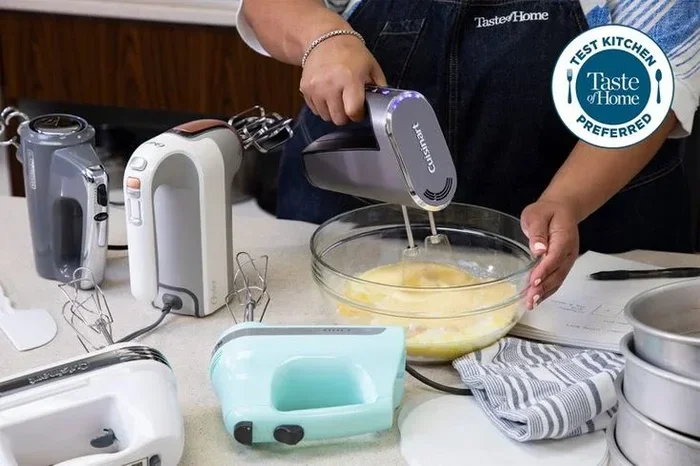
Our test kitchen has tried and rated the best hand mixer test kitchen options to help you find the perfect one for your kitchen. From budget-friendly picks to professional-grade models, these top-rated hand mixers deliver real results for bakers of every level. Read on to see which ones earned our highest marks and why they deserve a spot on your countertop.
You have a recipe you want to try. You gather your ingredients. You reach for your mixer — and it fails you. That frustrating moment happens more often than you think. A bad hand mixer can turn a simple baking project into a real headache.
That is exactly why our test kitchen spent weeks evaluating the best hand mixer test kitchen options available right now. We tested every model under real baking conditions. We whipped cream, beat eggs, kneaded dough, and mixed thick batters. We looked at power, comfort, noise, and durability. The result? A clear list of winners that actually earn their place in your kitchen.
Whether you bake once a month or every weekend, this guide helps you choose the right hand mixer without wasting money or time. We break down each pick with honest details, real test results, and practical advice you can use today.
Key Takeaways
- Top Picks Exist for Every Budget: Our test kitchen evaluated hand mixers across price ranges, so you can find a great option no matter your budget.
- Power Matters for Heavy Tasks: Higher wattage models handle thick dough and heavy batters with ease, while lighter models work great for everyday mixing.
- Attachments Make a Big Difference: The best hand mixers come with useful extras like dough hooks, whisk attachments, and storage cases.
- Ergonomics Count: Lightweight designs with comfortable grips reduce hand fatigue during long baking sessions.
- Speed Settings Add Versatility: Multiple speed options let you whip, fold, and knead without making a mess.
- Ease of Cleaning Saves Time: Models with removable parts and dishwasher-safe components make post-baking cleanup a breeze.
📑 Table of Contents
- Why a Hand Mixer Test Kitchen Matters
- Top Picks From Our Best Hand Mixer Test Kitchen Results
- Hand Mixer vs Stand Mixer: Which One Do You Really Need?
- What to Look for When Buying a Hand Mixer
- Common Mistakes People Make When Buying a Hand Mixer
- How We Test Every Hand Mixer in Our Kitchen
- Quick Tips for Getting the Most From Your Hand Mixer
- Final Thoughts on the Best Hand Mixer Test Kitchen Picks
Why a Hand Mixer Test Kitchen Matters
Not all hand mixers are created equal. Some feel great in your hand but lack the power to handle stiff dough. Others have plenty of muscle but are so heavy that your wrist hurts after five minutes. A proper test kitchen evaluation looks at all of this and more.
When we test kitchen mixer comparison models, we focus on what actually matters during real use. Here is what our test kitchen checks for every single mixer.
Real Baking Tests We Run
We do not just plug a mixer in and watch it spin. Our test kitchen runs through a full set of baking tasks with each model. These tests give us real data, not just marketing claims.
- Creaming butter and sugar: We measure how well each mixer blends cold butter with sugar until fluffy and smooth.
- Whipping egg whites: We time how long it takes to reach stiff peaks and check for consistency.
- Beating cake batter: We evaluate how evenly each mixer combines wet and dry ingredients without overworking them.
- Kneading bread dough: We test whether the mixer can handle dense, heavy dough without overheating.
- Mixing cookie dough: We check how well the mixer handles thick, sticky dough without struggling or stalling.
These tasks reveal the true strengths and weaknesses of each hand mixer for baking. A model that looks great on paper might fall apart during a real dough test. That is why our hands-on approach matters so much.
Top Picks From Our Best Hand Mixer Test Kitchen Results
After running dozens of tests, our test kitchen narrowed the field to the top performers. Each of these hand mixer review winners earned high marks across multiple categories. Here are the models we recommend most.
1. KitchenAid KHM926CU 9-Speed Hand Mixer
This model leads our rankings for a reason. It delivers strong performance with a quiet motor that handles everything from delicate whipped cream to heavy bread dough. The nine speed settings give you precise control, and the soft-start feature prevents ingredients from splattering out of the bowl.
Key features we loved:
- Durable metal construction that feels premium
- Easy-release button for fast attachment changes
- Removable beaters for simple cleaning
- Comfortable grip that reduces hand fatigue
- Includes storage case for neat countertop storage
The KitchenAid model is not the cheapest option, but it is one of the best hand mixer investments you can make. It lasts for years and performs beautifully every time.
2. Breville HandyMixer HMK125
Breville built this mixer with a focus on power and versatility. The motor delivers consistent speed even under heavy loads, which makes it excellent for serious bakers who work with dense doughs regularly.
What stood out during testing:
- Impressive torque that does not slow down under pressure
- Sleek, compact design that fits easily in small kitchens
- Intuitive speed dial for quick adjustments
- Dishwasher-safe attachments for effortless cleanup
- Strong build quality that inspires confidence
If you want a professional hand mixer without the price tag of a full stand mixer, the Breville HandyMixer is a standout choice. It punches well above its weight class.
3. Cuisinart HM-90BCS Smart Stick Hand Mixer
Cuisinart has long been a trusted name in kitchen appliances, and this model lives up to that reputation. It offers solid performance at a mid-range price point, making it a great option for everyday home bakers.
Notable strengths:
- Nine-speed motor with a turbo boost function
- Ergonomic soft-grip handle for comfort
- Includes whisk, flat beater, and dough hook attachments
- Compact storage with a built-in cord wrap
- Reliable brand with excellent customer support
The Cuisinart model is a strong budget hand mixer that does not sacrifice quality. It is one of the best values we found in our testing.
Hand Mixer vs Stand Mixer: Which One Do You Really Need?
This is one of the most common questions we hear in our test kitchen. The answer depends on how often you bake and what you typically make.
When a Hand Mixer Wins
A hand mixer shines in certain situations. If you bake occasionally, a hand mixer is the smarter choice. It takes up less space, costs less, and handles most everyday tasks with ease.
- You bake a few times a month or less
- You mostly make cakes, cookies, and light batters
- You have limited kitchen counter or storage space
- You want an easy-to-store appliance that works when needed
- You prefer a lighter, more portable option
When a Stand Mixer Makes More Sense
A stand mixer becomes worth the investment if you bake frequently or tackle heavy-duty recipes. The countertop mixer stays in place, has more power, and can handle large batches without tiring you out.
- You bake several times a week
- You regularly make bread, pizza dough, or large batches of cookies
- You want hands-free operation while mixing
- You need to mix very stiff or heavy doughs often
- You plan to use attachments like pasta rollers or food processors
For most home bakers, a quality hand mixer covers 90 percent of what you need. It is the practical choice for a well-equipped kitchen mixer setup.
What to Look for When Buying a Hand Mixer
Not sure what makes a hand mixer worth buying? Our test kitchen has identified the key factors that separate good models from great ones. Keep these in mind when you shop.
Motor Power
Motor power is one of the most important specs to consider. Most quality hand mixers range from 200 to 600 watts. A higher wattage motor handles thick batters and heavy doughs without slowing down or overheating.
For light tasks like whipping cream or beating eggs, even a 250-watt motor works fine. But if you plan to knead bread dough or mix stiff cookie dough regularly, aim for a model with at least 350 watts of power. This is where the best hand mixer test kitchen results really stand out — the top performers maintain steady speed under heavy loads.
Speed Settings
Multiple speed settings give you control over how fast or slow you mix. Most quality hand mixers offer between five and ten speeds. More speeds mean more precision, which matters when you are working with delicate recipes like meringues or sponge cakes.
Look for models that include a turbo or boost setting. This feature gives you a quick burst of high speed for breaking up lumps or combining ingredients fast. Our hand mixer test kitchen found that speed variety is one of the most-used features in real baking situations.
Weight and Ergonomics
This is something many buyers overlook, but it matters more than you think. A heavy mixer causes hand and wrist fatigue, especially during longer mixing sessions. The best lightweight hand mixer options weigh between 4 and 6 pounds.
Look for a model with a comfortable, soft-grip handle. The shape should feel natural in your hand and allow you to hold it at different angles without strain. Our testers noted that ergonomics made a huge difference in how long they could comfortably mix without taking a break.
Attachments and Accessories
The standard attachments include beaters, whisk attachments, and sometimes a dough hook. But the best hand mixers go beyond the basics. Look for models that include:
- A storage case or case to keep everything organized
- Dishwasher-safe parts for easy cleanup
- Extra attachments like a blending wand or pasta roller
- A pour guard to prevent ingredients from splashing out
Attachments expand what your mixer can do. A good set of hand mixer accessories turns a simple mixer into a versatile kitchen tool that handles far more than just mixing.
Common Mistakes People Make When Buying a Hand Mixer
Our test kitchen sees these mistakes repeatedly, and they cost buyers time, money, and frustration. Here is what to avoid.
Buying Based on Price Alone
The cheapest hand mixer on the shelf might seem like a great deal. But low price often means low power, flimsy build quality, and poor performance. A cheap mixer that breaks after six months costs more than a quality model that lasts for years. Always look at value, not just price.
Ignoring Motor Cooling
Some hand mixers overheat after just a few minutes of heavy use. Our test kitchen runs each mixer through extended dough tests to check for overheating issues. A motor that shuts down mid-recipe is incredibly frustrating. Always choose a model with adequate cooling and thermal protection.
Skipping the Test for Noise Levels
Not all hand mixers are quiet. Some models sound like a small airplane taking off, which can be annoying in a small kitchen or early morning baking sessions. We test noise levels on every mixer we review. The top kitchen mixer comparison models in our rankings are among the quietest we have tested.
Forgetting About Ease of Cleaning
Baking is fun. Cleaning up is not. A hand mixer with removable, dishwasher-safe attachments makes the cleanup process much faster and easier. Look for models where the beaters and other parts pop out quickly and go straight into the dishwasher.
How We Test Every Hand Mixer in Our Kitchen
Transparency matters. We want you to know exactly how we evaluate each hand mixer review candidate. Our testing process follows a strict protocol to ensure fair and accurate results.
First, we unbox each mixer and inspect the build quality. We check the materials, the weight, the feel of the buttons and switches, and how the attachments attach. Then we move into real baking tests, which we described in detail earlier in this guide.
After the baking tests, we evaluate noise levels, ease of cleaning, and overall comfort during extended use. We also check how well the mixer stores, whether the cord is long enough, and if the included attachments are practical and useful.
Every model receives a final score based on performance, build quality, value, and ease of use. The top-scoring models earn spots on our recommended list. This rigorous process ensures that our best hand mixer test kitchen picks truly deserve your attention and your money.
Quick Tips for Getting the Most From Your Hand Mixer
Once you choose the right hand mixer, a few simple tips help you get the best results every time.
- Start at the lowest speed: This prevents ingredients from splattering and helps you control the mixing process from the start.
- Use the right attachment: Beaters for batters, whisk for whipping cream or eggs, and a dough hook for heavy bread doughs.
- Do not overmix: Overmixing can change the texture of your baked goods. Mix just until ingredients are combined.
- Hold the mixer at an angle: Tilting the mixer slightly helps it grab ingredients more effectively and reduces splashing.
- Clean attachments right away: Washing beaters and whisk attachments immediately after use prevents dried-on batter from becoming difficult to clean.
- Store your mixer properly: Use the included case or hang the mixer to keep it in good condition and save counter space.
These small habits add up to a better experience every time you bake. They also help your kitchen mixer last longer and perform better over time.
Final Thoughts on the Best Hand Mixer Test Kitchen Picks
Finding the right hand mixer does not have to be overwhelming. Our test kitchen has done the hard work of testing, comparing, and rating the top models so you do not have to. Each of the picks in this guide delivers real results for real bakers.
Whether you need a powerful professional hand mixer for serious baking or a simple budget hand mixer for occasional cookie dough, there is a winner on this list for you. The key is to match the mixer to your baking habits, your kitchen space, and your budget.
Take your time, read through the details, and choose the model that fits your needs best. A great hand mixer makes baking more enjoyable, more efficient, and more consistent. That is a win no matter how often you mix things up in the kitchen.
The best hand mixer test kitchen picks in this guide are not just good on paper. They perform well in real kitchens, under real conditions, with real recipes. That is the standard we hold every model to, and that is the standard we encourage you to expect from your next purchase.
Frequently Asked Questions
What makes a hand mixer the best choice for a test kitchen?
A hand mixer earns top marks in a test kitchen when it delivers consistent power, comfortable handling, and reliable performance across a wide range of baking tasks. The best models handle light whisking and heavy dough kneading without struggling or overheating.
How often should I replace my hand mixer?
A quality hand mixer can last five to ten years with proper care. You should consider replacing it when the motor becomes weak, speed settings become inconsistent, or attachments no longer work smoothly. Regular cleaning helps extend its lifespan significantly.
Can a hand mixer replace a stand mixer for most baking tasks?
For most home bakers, yes. A hand mixer handles the vast majority of everyday baking tasks like cakes, cookies, whipped cream, and light doughs. Stand mixers become more necessary only when you bake very frequently or work with extremely heavy, dense doughs on a regular basis.
What is the ideal wattage for a home hand mixer?
Most home bakers do well with a hand mixer rated between 250 and 400 watts. This range provides enough power for typical baking tasks while keeping the mixer lightweight and easy to handle. Higher wattage models are better for bakers who regularly work with stiff doughs.
Are hand mixers easy to clean?
Yes, most modern hand mixers are designed for easy cleaning. The beaters and whisk attachments are typically removable and dishwasher-safe. Wiping down the motor body with a damp cloth after each use keeps it looking and functioning like new.
What attachments should I look for in a hand mixer?
The essential attachments include standard beaters for general mixing, a whisk for whipping cream and eggs, and a dough hook for heavier doughs. Some models also include blending wands and storage cases, which add extra convenience and versatility to your hand mixer test kitchen experience.